The thought is made of parts
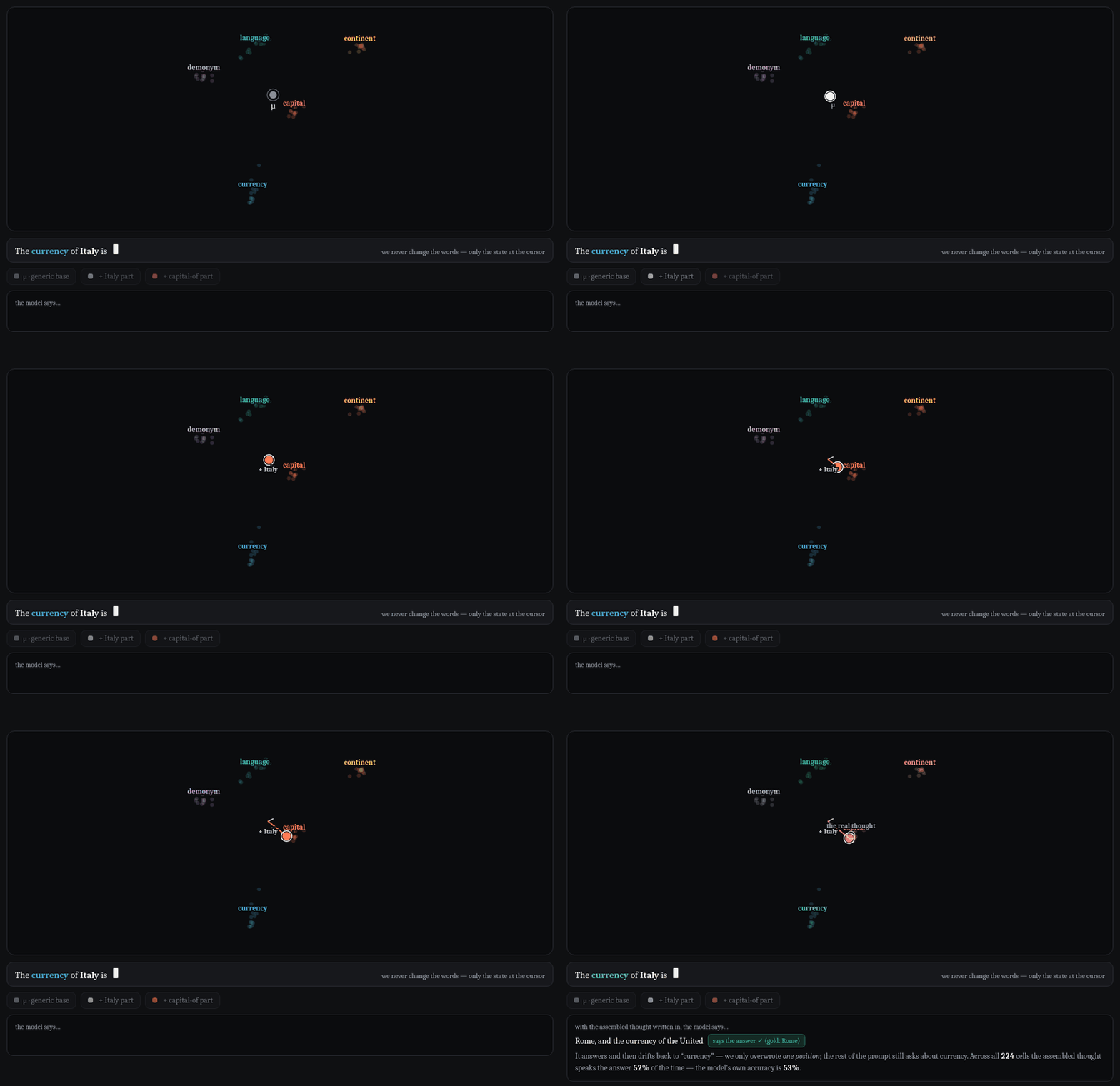
We took a language model's thought — "the capital of Italy" — apart into three averaged ingredients, put them back together, wrote the assembled state into a single spot inside the model… and it said "Rome". Swap the Italy part for France and it says "Paris". Push the same knob 4× too hard and it babbles — yet still knows the answer.
The numbers
The honest null that started this
This project began as a replication of a "readable subspace" claim — which did not replicate under matched controls. The structure reported here is causal organization, validated against nulls that preserve every statistic of the method while destroying its meaning. Every claim sits next to the control that could have killed it in Evidence & controls.
Paper: Operator–Operand Factorization in LLM Residual Streams: Causal Influence and Compositional Sufficiency — PDF · abstract & BibTeX · code & reproducibility · what's next
Matias Podeley · independent researcher · mpodeley@gmail.com · MIT license · learn the field in Spanish: Interpretabilidad Mecanicista